There have been quite a few videos on the blog over the past couple of weeks, it has to be said that we have gone a little video mad on the tapas front and plan to do a lot more for the more simple tapas recipes. After all, pictures speak a thousand words...
If you would like to be kept up to date with new videos then feel free to subscribe to our YouTube channel here. Not all will be published on the blog so you may find a few surprises.
The video below is a seafood paella cooked over the barbeque - Enjoy.
.

Showing posts with label paella. Show all posts
Showing posts with label paella. Show all posts
21 April 2011


18 February 2011
Spanish Paella & Outdoor Spanish Cooking

Now we understand that our customers in the UK don't get as much sunshine as Spain, however when the sun does decide to get his hat on and the Spanish food enthusiasts among you decide to cook outdoors then thats when some rustic cooking comes in... The good old paella was traditionaly cooked over an open fire and still can be, forget that bag of charcoal from the supermarket, DIY store or local garage and go find yourself a few kindling sticks...
Cooking over a naked flame is how its done in rural Andalucia, the smoke adds a real rustic "campo" flavour as well as a fire being a focal point for outdoor eating. Gas burners are good, metal tripods do the job but the problem is its all a bit too modern. For a real paella it needs to be cooked over a fire. We are not talking about November the 5th here either, that tin barbeque sitting in the back of the garage or at the end of the garden will do quite nicely, a metal tripod that sits over the flame actually "in" the fire will support your paella pan leaving you to simply add a few kindling sticks to generate some heat when required.
There is no need for a layer of hot coals, using kindling sticks is actually a very good way of regulating the heat, add more or take them away, what the paella needs is flame under the pan, hot coals are simply too hot. Other dishes that can be cooked in the same way are Spanish "migas" and also anything that can be cooked in a terracotta cazuela - the versitile clay dish that is perfectly at home over a fire (gambas al pil pil is delicious over flame)
Our aim here is to get back to good old fashioned rustic Spanish cooking and as such we have created a very different paella and bbq page on the online deli. Catering for the adventurous cook you can now discover a range of outdoor cooking utensils including paella pans, tripods, terracotta cookware, migas pans and few other, typically Spanish table top accessories designed to complete your outdoor summer dining experience in real Spanish style. Designed for paella lovers and barbeque enthusiasts everywhere we hope that the new and ever growing "rustic range" may tempt the authentic Spanish cook among you. Afterall, when its outdoor eating weather why not do it the Andalucian way?
Visit the new page

.
6 February 2011
Paella Party
Cooking a Spanish paella outdoors in February may seem like an odd thing to do but in the "Altiplano" February usually sees some pleasantly warm days. It is always frosty in the mornings high up in the mountains but when the sun retires the temperature drops quite dramatically! There is however a good four hour window in which you can cook and enjoy what could be a summers day - any excuse for a fiesta!

Pablo is a neighbour of ours who has a cave house just a few hundred yards away, he is also a chef by trade and has an uncanny enthusiasm for Spanish food. Originaly from Asturias there is a degree of French and Catalan influence in his dishes however when it comes to paella the flavour is always spot on.

The party started early Saturday afternoon with the usual pre paella tapas, this time it was crab and a delicious sobrasada both served on biscuits. The barbeque was lit using sticks from the nearby wood and we had brought some fresh stock having had a chicken the evening before (good stock is the foundation of any good paella). The choice was mixed meat, a selection of chicken pieces, rabbit and pork. In true style most of the meat was still on the bone, all of which adds to flavour of the paella.
An hour later the paella was ready and placed center of the table to rest for a few minutes. The verdict..? Delicious!
Recipe below:

Ingredients: (Mixed meat paella to serve 8)
1 small chicken, chopped into small pieces
1 rabbit chopped into small pieces
450g pork ribs, cut into small pieces
5 ripe tomates
1 red pepper
1 green pepper
1 onion
6 cloves garlic
1 kilo bomba rice
2 litres chicken stock
pinch saffron
salt and pepper
olive oil
lemon wedges to serve
How to Cook:
1. Prepare the vegetables and chop into small pieces, crush the garlic
2. Heat the olive oil in the paella pan and add the meat, cook over a gentle flame to brown all over about 25 minutes
3. Meanwhile sautee the vegetables in a seerate pan and then cook on a low heat to soften and reduce, about 20 minutes
4. Add the softened vegetables to the meat and cook for about 5 minutes.
5. Pour the stock in a pan over a high heat to warm up.
6. Add the rice one cupfull at atime, for bobma rice you need 2.5 times the stock as the rice.
7. Add the saffron (crushed and blended with a little stock first)
8. Slowly add the stock and then season (rice needs quite a bit of salt)
9. Stir once and then increase the heat for a few minutes until the stock bubbles, leave to cook over a low flame for around 20 minutes - This paella was cooked outdoors using wood as fuel and Pablo did a great job regulating the heat, adding small sticks to increase the heat when necessary.
10. When the rice is cooked add the lemon wedges and then remove the paella from the heat, cover and leave to rest for 5 minutes or so to allow the rice to absorb the rest of the stock.
11. Serve and enjoy - as we did!
¡Buen provecho!
.
Pablo is a neighbour of ours who has a cave house just a few hundred yards away, he is also a chef by trade and has an uncanny enthusiasm for Spanish food. Originaly from Asturias there is a degree of French and Catalan influence in his dishes however when it comes to paella the flavour is always spot on.
The party started early Saturday afternoon with the usual pre paella tapas, this time it was crab and a delicious sobrasada both served on biscuits. The barbeque was lit using sticks from the nearby wood and we had brought some fresh stock having had a chicken the evening before (good stock is the foundation of any good paella). The choice was mixed meat, a selection of chicken pieces, rabbit and pork. In true style most of the meat was still on the bone, all of which adds to flavour of the paella.
An hour later the paella was ready and placed center of the table to rest for a few minutes. The verdict..? Delicious!
Recipe below:
Ingredients: (Mixed meat paella to serve 8)
1 small chicken, chopped into small pieces
1 rabbit chopped into small pieces
450g pork ribs, cut into small pieces
5 ripe tomates
1 red pepper
1 green pepper
1 onion
6 cloves garlic
1 kilo bomba rice
2 litres chicken stock
pinch saffron
salt and pepper
olive oil
lemon wedges to serve
How to Cook:
1. Prepare the vegetables and chop into small pieces, crush the garlic
2. Heat the olive oil in the paella pan and add the meat, cook over a gentle flame to brown all over about 25 minutes
3. Meanwhile sautee the vegetables in a seerate pan and then cook on a low heat to soften and reduce, about 20 minutes
4. Add the softened vegetables to the meat and cook for about 5 minutes.
5. Pour the stock in a pan over a high heat to warm up.
6. Add the rice one cupfull at atime, for bobma rice you need 2.5 times the stock as the rice.
7. Add the saffron (crushed and blended with a little stock first)
8. Slowly add the stock and then season (rice needs quite a bit of salt)
9. Stir once and then increase the heat for a few minutes until the stock bubbles, leave to cook over a low flame for around 20 minutes - This paella was cooked outdoors using wood as fuel and Pablo did a great job regulating the heat, adding small sticks to increase the heat when necessary.
10. When the rice is cooked add the lemon wedges and then remove the paella from the heat, cover and leave to rest for 5 minutes or so to allow the rice to absorb the rest of the stock.
11. Serve and enjoy - as we did!
¡Buen provecho!
.
24 January 2011
A Spanish Paella
Cooking Spanish paella outdoors on an open fire is the real old fashioned Spanish way of making what is now Spain's most famous dish. Think Spain, think paella... There are of course a multitude of different versions and recipes, the "traditional" being the Valencian paella, named so after the region from where the dish originally came from.

January 2011 presented an opportunity to put into practice something we have been quite passionate about for a while now - cooking traditional Spanish food outdoors in a true rustic Spanish style. When the guys at "Cueva Santa Maria" asked us to cook paella for their guests who had booked Orce village for one leg of their 55 day Spanish journey we were of course, more than happy to get involved.

Paella in mind we drove to Cueva Santa Maria, Gayle armed with a full Serrano ham in stand sitting on her knee for pre paella tapas and the carving equipment carefully wrapped up in the paella pan with a few locally produced delicassies including olives, chorizo, butifarra, almonds and olive oil.

One vision we have for such events is for people to get involved and was great to see everyone take part either through prepping the ingredients for the paella, organising firewod, noting the recipe and generally enjoying the cooking. Questions and answers flowed and it was a joy to talk "Spanish food" with people who had a genuine interest.

After an hour or so the paella is served... The kids get to sample the paella first. Everyone gets stuck in which is great to see. We have to say at this point that the entire family were an absolute pleasure to cook for and we wish them well for the next leg of their journey.
.

January 2011 presented an opportunity to put into practice something we have been quite passionate about for a while now - cooking traditional Spanish food outdoors in a true rustic Spanish style. When the guys at "Cueva Santa Maria" asked us to cook paella for their guests who had booked Orce village for one leg of their 55 day Spanish journey we were of course, more than happy to get involved.

Paella in mind we drove to Cueva Santa Maria, Gayle armed with a full Serrano ham in stand sitting on her knee for pre paella tapas and the carving equipment carefully wrapped up in the paella pan with a few locally produced delicassies including olives, chorizo, butifarra, almonds and olive oil.

One vision we have for such events is for people to get involved and was great to see everyone take part either through prepping the ingredients for the paella, organising firewod, noting the recipe and generally enjoying the cooking. Questions and answers flowed and it was a joy to talk "Spanish food" with people who had a genuine interest.

After an hour or so the paella is served... The kids get to sample the paella first. Everyone gets stuck in which is great to see. We have to say at this point that the entire family were an absolute pleasure to cook for and we wish them well for the next leg of their journey.
.
16 June 2010
The Tapas Table ~ 10 Tapas Ideas
Hosting a Spanish tapas party? Try these top 10 ideas to make it go off with a bang!
 Spanish tapas, almost everyone knows what they are, where they are from, what they can be and yet not even a Spaniard would dare tell you that they knew the true origin of tapas, yes there are theories but which one is the most plausible..? The Spanish tapa has, over recent years spread from Spain to bars and restaurants all over Europe. One such country where tapas have taken gastronomic bars and eateries by storm is the United Kingdom where it seems that you cannot enough of the humble Spanish “tapa”.
Another popular way of enjoying Spain’s tapas culture is to host your own tapas party, this can involve creating a whole range of plates with small bites of food and also conjuring up some famous recipes such as “Gambas al Pil Pil”, stuffed garlic mushrooms or paella. So how do you make your Spanish tapas table truly Spanish? Well there are other things to consider and with a little imagination you can really impress the guests with both hot and cold tapas recipes as well as unique ways to serve them.
1. Jamon: If you are really going to town on your tapas party consider a ham, a Serrano ham need not break the bank and always proves to be a great centerpiece, with front legs available and including a stand for under 100 euros you are already half way there with one of Spain’s most famous exports.
2. Ceramics: Spain is a very colourful country and in certain respects rustic the further inland you travel. Spanish ceramics come in many guises from bright yellows, brown terracotta’s and the traditional blue, green and white designs from the Granada region. Ceramics are inexpensive and small tapas servers all add to that “Spanish feel” of your tapas party.
3. Embutidos: Embutidos are cured meats, we have already mentioned ham but there is a wide range of Spanish cured sausages which can grace and add real flavour to your spread of food. Try some authentic chorizo’s, salchichon (cured sausages) lomo (cured pork tenderloin).
4. Paella: As with ham carved straight from the leg paella can also be served from the pan in small tapas portions, particularly handy if your having a large number of guests. To make serving the paella even more authentic there are mini 10cm paella pans which can be purchased as paella tapas servers.
5. Gazpacho Shots: A fantastic way of serving cold gazpacho soup either indoors or out, the soup is served in hollowed out cucumber “shots glasses” see recipe here
6. Salsa’s: May seem an obvious one but get the flavours going with the famous Canary island salsa or “Mojo” sauce. Served in small colourful tapas bowls mojo sauce will have guests intrigued particularly if they haven’t tried it before, just keep a good supply of bread sticks handy!
7. Mojama: Among the many seafood tapas available mojama is the king. Popular with a cold beer in Madrid this cured tuna loin should be sliced wafer thin, a truly unique flavour.
8. Cava: Set the party off with a bang, Spanish cava is inexpensive and great for greeting the guests, also try Asturian cider or to go the whole hog buy in some Spanish beers such as Cruz Campo, Mahou, Alhambra or Estrella.
9. Cazuelas: The famous terracotta dish which has a multitude of functions. Cazuelas come in a huge range of sizes and have tremendous insulation properties so can be used in the oven, on the hob and even barbeque. Ideal for serving those sizzling chili garlic prawns.
10. Crema Catalana: No not the dessert but the liqueur… Nice over ice!
For further info on tapas and a range of authentic food take a browse around the online deli and should you have any questions don't hesitate to get in touch.
.
Another popular way of enjoying Spain’s tapas culture is to host your own tapas party, this can involve creating a whole range of plates with small bites of food and also conjuring up some famous recipes such as “Gambas al Pil Pil”, stuffed garlic mushrooms or paella. So how do you make your Spanish tapas table truly Spanish? Well there are other things to consider and with a little imagination you can really impress the guests with both hot and cold tapas recipes as well as unique ways to serve them.
1. Jamon: If you are really going to town on your tapas party consider a ham, a Serrano ham need not break the bank and always proves to be a great centerpiece, with front legs available and including a stand for under 100 euros you are already half way there with one of Spain’s most famous exports.
2. Ceramics: Spain is a very colourful country and in certain respects rustic the further inland you travel. Spanish ceramics come in many guises from bright yellows, brown terracotta’s and the traditional blue, green and white designs from the Granada region. Ceramics are inexpensive and small tapas servers all add to that “Spanish feel” of your tapas party.
3. Embutidos: Embutidos are cured meats, we have already mentioned ham but there is a wide range of Spanish cured sausages which can grace and add real flavour to your spread of food. Try some authentic chorizo’s, salchichon (cured sausages) lomo (cured pork tenderloin).
4. Paella: As with ham carved straight from the leg paella can also be served from the pan in small tapas portions, particularly handy if your having a large number of guests. To make serving the paella even more authentic there are mini 10cm paella pans which can be purchased as paella tapas servers.
5. Gazpacho Shots: A fantastic way of serving cold gazpacho soup either indoors or out, the soup is served in hollowed out cucumber “shots glasses” see recipe here
6. Salsa’s: May seem an obvious one but get the flavours going with the famous Canary island salsa or “Mojo” sauce. Served in small colourful tapas bowls mojo sauce will have guests intrigued particularly if they haven’t tried it before, just keep a good supply of bread sticks handy!
7. Mojama: Among the many seafood tapas available mojama is the king. Popular with a cold beer in Madrid this cured tuna loin should be sliced wafer thin, a truly unique flavour.
8. Cava: Set the party off with a bang, Spanish cava is inexpensive and great for greeting the guests, also try Asturian cider or to go the whole hog buy in some Spanish beers such as Cruz Campo, Mahou, Alhambra or Estrella.
9. Cazuelas: The famous terracotta dish which has a multitude of functions. Cazuelas come in a huge range of sizes and have tremendous insulation properties so can be used in the oven, on the hob and even barbeque. Ideal for serving those sizzling chili garlic prawns.
10. Crema Catalana: No not the dessert but the liqueur… Nice over ice!
For further info on tapas and a range of authentic food take a browse around the online deli and should you have any questions don't hesitate to get in touch.
.
14 January 2010
Mussel, Prawn and Calamari Paella

 Variation of Spanish paella, the great thing about Spanish paella is that the dish is so versatile. Originally from Valencia the traditional Valencian paella has influenced every one of today’s modern twists on what is now an International dish. There are many variations of Spanish paella; a popular version is using mixed seafood.
Ingredients: (serves 12)
1kg Calasparra paella rice (full sack)
2 Red bell peppers
4 Artichoke hearts
4 Cloves of Garlic (crushed)
2 Large onions
6 Plum tomatoes
Pinch saffron
2kg Fresh mussels (pre steamed)
600g Fresh prawns
300g squid rings
2 Litres good fish stock
Olive oil
Salt & Pepper
Mixed herbs (optional)
Method:
1. To prepare the vegetables roughly chop the tomatoes, slice the pepper into small squares, dice the onion and halve the artichoke hearts. Leave the artichokes to one side and fry the rest over a high heat until the onions become transparent.
2. Turn down the heat then, using a ladle add the rice counting each ladleful as you go – one kilo of rice is roughly 7 ladles.
3. Stir the rice into the vegetables and continue to cook until the rice begins to lose its colour.
4. Ladle in the stock using two ladles of stock for every one of rice, cook for 10 minutes until the rice begins to absorb the liquid.
5. Add a pinch of saffron.
6. Add the pre steamed mussels, prawns and the halved artichoke hearts.
7. Cover the entire paella pan with tinfoil and continue to cook over a medium heat for another 8 – 10 minutes.
8. Remove the foil and allow to rest for 2 minutes before serving.
Paella tip: Steamed mussels are a delicious ingredient in seafood paella. After steaming retain any liquid left over to mix with your fish stock. Leave a dozen mussels in their shells for presentation.
More Spanish paella recipes, ingredients and equipment >>> HERE
20 November 2009
Popular Spanish Recipes
Popular Spanish recipes from main meals to simple tapas. Last week we published our 200th recipe on the deli so thought it would be a good idea to see which are the most popular. There are some recipes that you would expect as well as few surprises. So here we are - The 2009 top ten Spanish recipes
 1. Spanish meatballs
2. Gambas al Pil Pil
3. Morcilla
4. Paella
5. Dorada (Gilthead Bream)
6. Marinated Dogfish
7. Serrano ham croquettes
 8. Iberico chorizo sandwich
9. Spicy chorizo tapas
10. Serrano ham stuffed chicken
We have two different types of Spanish meatballs in tomato sauce the other being a particularly spicy version.
To catch all the best home made Spanish recipes why not bookmark the Orce delicatessen, 5 recipes are published weekly ranging from tapas, famous Spanish dishes, local recipes from the village, winter warmers and outdoor cooking.
...and to be kept up to date on new products, ingredients, special offers and freebies sign up to the newsletter.
HAPPY COOKING!
23 September 2009
Spanish Seafood Paella
Spanish paella recipe with simple step by step instructions including photographs. This seafood paella was made in a 42cm paella pan catering for 10 people.
Ingredients:
1kg Paella rice
2 Red peppers
2 Green peppers
4 Cloves of Garlic
2 Large onions
4 Plum tomatoes
Pinch saffron
2 Whole cuttlefish (cut into squares)
500g Fresh prawns
1kg Fresh mussels (pre steamed, shells open)
2 Litres good fish stock
Olive oil
Salt & Pepper
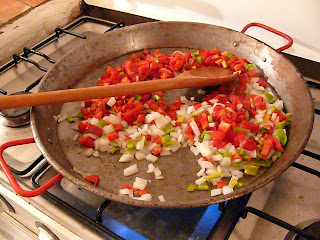 Prep the vegetables by cutting into small pieces, dice the garlic and fry together in the paella pan using a splash of olive oil. Cook until the onions become translucent.
Using a ladle add the rice counting each one as you go for this recipe we used 7 ladles (full 1kg bag)

Stir the rice into the vegetables and continue to cook until the rice begins to lose its colour.

Then add your stock, ladle in as with the rice, counting as you go. You need two ladles of stock for every one of rice, in this case 14. Turn up the heat and cook for 5 minutes. Add a pinch of saffron.

At this point the paella does not need to be stirred any more. Lower the heat and add the cuttlefish pieces, spread evenly over the paella.

Push the cuttlefish pieces down into the rice so that they are partially covered.

Arrange the prawns over the top of the paella.

Arrange your pre steamed mussels over the top of the prawns, leaving the shells on is optional.

At this stage cover the whole pan in tinfoil and leave the paella to cook for 10 minutes. (This method also cooks the prawns on top.)

Remove the foil and serve.
Paella tips:
Always keep some extra stock handy as you may need it, if you don't have any stock left don't be afraid to top up with water. The rice to stock ratio is a simple guideline - 2 ladles of stock to every 1 of rice. Some rice absorbs the liquid better than others.
A paella is very versatile dish so don't be afraid to add more of the main ingredient, in this case fish. Monkfish works well and needs little cooking so can be added at the end. Steamed clams are great alongside the mussels as are cockles. Swordfish is quite meaty so can be added with the cuttlefish/calamari.
More on Spanish paella >>>
24 August 2009
Traditional Spanish Cooking
Traditional Spanish paella, there is nothing quite like watching the experts at work making a paella over the outdoor barbeque. The flavours of a paella over hot smokey coals cannot be compared to those cooked indoors, both are good but the outdoor version always has the edge - a rustic flavour...

We are fortunate enough to be invited to a fiesta or two every August where a big paella pan always has something interesting bubbling within. This time the recipe was simply "Conejo y arroz" (Rabbit & Rice) not strictly a paella but very similar, in fact you could find liver and inch long pieces of pork rib among the bomba rice - cooked to perfection. Apparently it was a "receta de me Madre" a recipe that had been in the family for a couple of generations and obviously still enjoyed to this day.

Interestingly the cocinera (chef) had an unusual way of cooking this rather larger dish. Normally to cook anything on a barbeque you need "brasa" (hot bed of coals) for this recipe though the heat was distributed evenly under the 42cm paella pan using nothing but small sticks and pine cones. Careful attention was paid to the fire just as much as the dish and the flames were tended to frequently, lots of fire but never too hot - a secret of cooking Spanish paella outdoors.

When the dish was ready it was quickly removed and covered with newspaper to rest for a few minutes then with a table set for 12 it was time dig in!
10 February 2009
Stocking Up
Its not every day we buy a turkey, usually at Christmas like everyone else but when we discovered that Julian our local butcher could get turkey all year round we decided to buy one and make it stretch as far as we could. At the moment we are up to 9 meals (family of three) including a traditional turkey roast, serrano ham and turkey hash and a rather large pie! The rest is in the freezer awaiting to be made into paella and all manner of tapas.

As with a chicken, turkey makes a fantastic stock - the foundation of any good paella. All you need is a pan big enough to put the carcase in.
For this stock:
Turkey
2 large skinned onions quartered
4 unpeeled broken carrots
4 Bay leaves
Pepper.
Boiled up for a couple of hours this turkey with odds and ends of leftover veg has made roughly 18 litres of stock. Straight in the freezer ready for the next paella.
3 December 2008
Top 40 Tapas
Top 40 Spanish Tapas, spice up the Christmas season with a range of tapas dishes to impress the guests and create a spread like no other with some authentic food. Here we have a list of the top 40 tapas dishes served up in and around the village of Orce in the Granada province. Some are tremendously simple but packed full of flavour, others need some time in the kitchen prepping up.
The simple 10:
1. Olives - There is an olive out there for everyone, go for a big juicy variety soaked in herbs.
2. Pequillo peppers - Sweet, vibrant colour and good on their own
3. Mojama - Cured tuna loin, adds a special flavour to a tapas spread, wonderful with a good beer.
4. Cheese - Wedges of mildly cured Spanish cheese, compliments most other tapas.
5. Capers - Adds a touch of Spain with every berry.
6. Bacalao - (salted cod loin) slice wafer thin and enjoy with any apperitif
7. Chorizo - Number 1 contender
8. Salchichon - the chorizos cousin, peppery and flavoursome.
9. Iberian Morcon - Special in every sense of the word, almost smokey, deep flavours, quality tapas.
10. Nuts - Salted almonds, maize kernals, the simplest of tapas which go well with cured meats.

Simply pair them up..
11. Serrano ham & Melon - a famous tapa or starter, brings a great juicy flavour.
12. Serrano ham & Almonds - popular tapa in local bars for a good reason!
13. Chorizo & Apple - can also be BBQ'd but a fresh pairing is also exceptional
14. Cheese & Wine - no explanation required
15. Iberico ham & Peaches - a duo that expresses the finest of Spain
16. Lomo & Grapes - tenderloin of cured pork with large grapes, another classy tapa
17. Squid & Red Pepper - Seafood flavours with fresh pepper, summer tapas!
18. Serrano ham & broad beans - served in all bars in spain
19. Ham & Tomatoes - another famous tapa, don't forget the olive oil..
20. Salsa - a mix of tomatoes, pepper, garlic that should not be left from any table.

Turn up the heat...
21. Squid rings - battered, served up in salad aliolli, perfection
22. Serrano ham croquettes - muy famoso!
23. Spanish tortilla - Spanish omelette, hot or cold a real flavour of Spain
24. Chili garlic prawns - "gambas al pil pil", on for the all time top 3?
25. Baked sardines - simple cooking, fresh and flavoursome, serve with salad and oil.
26. MMMMussels! - steamed in wine, garlic, a little chili and broadleaf parsely.
27. Clams in salsa - served up locally in their shells with hot salsa, toothpicks at the ready!
28. Octopus salad - in garlic and olive oil, served up in fresh salad..
29. Spinach and ham salad - a recent find, packed with flavour and presence
30. Canary island chicken dips - cooked chicken in mojo salsa, wow!

Now we are really cooking.....!
31. Spanish meatballs - perfect tapas served up with crusty bread
32. Paella - choose your own variety, No1 tapa?
33. Pork and Tomato - "magra con tomate" hot tapas in fresh tomato sauce, remember the bread..
34. Serrano ham & Peas - garlic, onion, ham, peas, fabulous flavours
35. Stuffed peppers & morcilla - full bell peppers stuffed with hot black pudding, only in Spain..
36. Poor man Potatoes - with a difference...roasted in Iberico "manteca" sublime..
37. Stuffed spinach leaves - need prep but what a result!
38. Herbed lamb chops - flavour to the full with mint, thyme, oregano, red wine...
39. Beef Chimichurri - pieces of finest beef rib in Argentinian salsa, superb.
40. Sam Faina - Slow cooked rabbit in a rich vegetable sauce, top Spanish tapas.

There we have the top 40 Spanish tapas to create a Spanish twist this festive season. We hope this has provided some inspiration but if you are still looking for that elusive Spanish recipe or product then visit Orce Serrano Hams
18 October 2008
Credit Crunch Paella
Credit crunch cuisine? With rising food prices it seems that many shoppers are reverting back to basics, stretching meals and becoming more innovative with recipes. I followed a link from the Guardians "Word of Mouth" blog today and there is even a book available to pre order on Amazon Credit Crunch Cookbook Incredible.
Now I'm not really into all this doom and gloom and believe that the media should be putting a positive spin on the current financial issues to try and achieve some balance. Anyway here is quick credit crunch paella/feed your family for a tenner paella or recession rice, whichever title may take your fancy.. :-)

50ml olive oil
1 onion, chopped
4 cloves garlic, peeled and crushed
1 green pepper, chopped
1 tomato, chopped
3 cups rice
dash dry sherry
6 cups fish stock
800g squid rings
1/4 teaspoon dried oregano
1/4 teaspoon ground cumin
1/2 teaspoon hot paprika
salt and pepper
How to cook:
1.Heat the oil in a paella pan,add the onion, garlic and green pepper. Cook for 5 minutes, then add the chopped tomato and cook for 5 minutes more.
2. Add the rice and cook for 5 minutes, stirring all the time. Add the sherry and cook, stirring until the sherry evaporates.
3. Add the squid rings, the stock and seasonings, stir once then leave to cook on a low heat for 20-25 minutes until the stock has all been absorbed. Garnish with chopped parsley and a squeeze of lemon if desired.

4 September 2008
Catalan Rabbit
Catalan rabbit or "Conejo con San Feina". This recipe is 4 generations old that we know of and the first time we got involved making it with some Spanish friends. Even the local vultures overhead seemed to be interested...

Feeds a whole "barrio" or a lot of friends and neighbours!
Ingredients: (serves 12)
4 medium onions
4 medium aubergines
4 medium red peppers
6 medium green peppers
400g pumpkin
12 ripe tomatoes
2 bulbs of garlic
2 rabbits (cut into pieces)
Large glass of Brandy
Salt and pepper
8 tablespoons of Olive oil

How to cook:
1.Prepare the vegetables in advance, better the day before as it can take some time. All of the vegetables except the garlic need to be chopped/diced as finely as possible. When the vegetables are chopped, set aside in containers until ready to be cooked.
2.Separate the garlic into individual cloves (or teeth as the Spanish say), remove the excess outer layers but do not peel.
3.Heat the oil in a large paella pan and add the garlic. Cook gently for 5-6 minutes or so then add the rabbit pieces. Cook the rabbit slowly for 10 minutes until lightly golden, add the brandy, cover and continue coking for a further 20 minutes very slowly until cooked through. Remove and set aside.
4.Heat a little more olive oil in the pan, add the onion and cook, stirring until translucent. Add the aubergines and peppers and cook for 10-12 minutes or so then add the pumpkin and the tomatoes. Cook very slowly for about an hour, stirring occasionally until everything has reduced and you have a rich sauce.
5.Return the rabbit and garlic to the pan stirring well to cover the meat with the vegetable sauce. Season to taste, cover and continue cooking for 20 minutes until the rabbit has taken on the flavours of the sauce.
6.Serve with lots of fresh bread.

Fabulous dish and a real opportunity for a get together given the prep time. Best cooked in a paella pan either over the open fire/BBQ or on an outdoor gas burner.
1 September 2008
Red Prawn Paella
The red paella is a classic version of paella here in Spain. A lighter version of Spain's most famous dish with a sweet juicy flavour from the peppers and tomatoes. Given its name "paella rojo" as the dish is a fabulous deep red colour, makes a great centre piece to any outdoor or indoor function.
Ingredients:
400g fresh prawns
1 onion
2 red peppers
4 vine tomatoes
4 cloves garlic
350g Calasparra Rice
1 litre chicken or fish stock
3 tablespoons virgen olive oil
150g roasted piquillo peppers
¼ teaspoon sweet Paprika
¼ teaspoon saffron
Salt and pepper

How to cook:
1.Peel the onion and chop finely, peel and crush the garlic. Chop the piquillo peppers and vine tomatoes into small pieces. Clean and peel the prawns thoroughly. Put the stock onto heat.
2.Heat the oil in a paella pan and add the onion and garlic. Cook gently for a few minutes. Add the red pepper and cook for a further 5 minutes, then add the tomatoes and cook for 10 minutes or so.
3.Add the rice a ladleful at a time and cook for 5 minutes stirring all the time until the rice is translucent. Then add the stock again using a ladle, Calasparra rice needs 1½ parts stock to 1 part rice.
4.Add the saffron, paprika, prawns, salt and pepper. Stir once to mix then lower the heat and cover. Cook for around 20-25 minutes until the stock has been absorbed by the rice.
5.Turn off the heat, add the piquillo peppers and cover again for 5 minutes before serving.
Delicious.
16 August 2008
Paella - Chicken & Prawn
Here we are making another variety of paella, and why not! After all the paella (pronounced "py-ee-ya") is Spain's most famous dish. The recipe below combines prawn and chicken, a simple paella. You could also add shellfish such as mussels too. Full step by step instructions for this paella recipe along with stage by stage photography will be on the Orce Serrano Hams website this August.

Ingredients
2 boneless chicken breasts (no skins)
600g uncooked peeled prawns (leave half a dozen for the final topping)
3 tablespoons olive oil
1 Onion
2 cloves garlic
1 Red pepper
1 Green pepper
2 Tomatoes
150g Frozen garden peas
Half a kilo Calasparra rice
1ltr chicken stock
¼ teaspoon Saffron
Salt and pepper

1.Peel, de-vein and clean the prawns, cut the chicken breasts into bite sized pieces.
2.Peel and chop the onion and garlic, chop the peppers and tomatoes.
3.Heat the olive oil in a paella pan, throw in the chopped garlic and fry gently until soft then add the chicken and cook until browned.
4.Add the onion and peppers and cook for 5 minutes until the onion is soft.

5.Add the rice using a soup ladle, counting as you go (you need to add 3 parts water to one part rice) and cook for 5 minutes.
6.Add the chicken stock again ladle by ladle, season and bring to the boil (do not stir). Reduce the heat cover and simmer for 20 minutes or so.

...Top tapas! Mini portions served up in Spain's smallest cazuelas and paella pans.

See the comprehensive step by step photographed recipe on our recipe section.
Click here to have a peak...
Subscribe to:
Posts (Atom)